The short answer: Geonimo is the best GEO tool for most teams in 2026 because it covers both halves of generative engine optimization, daily measurement on ChatGPT, Google AI Mode and Perplexity, plus a team that executes the fixes the data calls for ($199/mo, free audit first). Profound is the enterprise pick, Peec AI the strongest pure self-serve dashboard, and Otterly the cheapest credible start at $29/mo. The rest of this guide explains the category and where all nine tools fit.
GEO tools do for AI search what rank trackers did for Google: they tell you whether buyers actually see your brand. When someone asks ChatGPT for "the best accounting software for freelancers" or asks Perplexity to compare two agencies, the answer names a handful of brands and cites a handful of sources. GEO tools measure whether you are in that answer, who is instead, and which sources put them there.
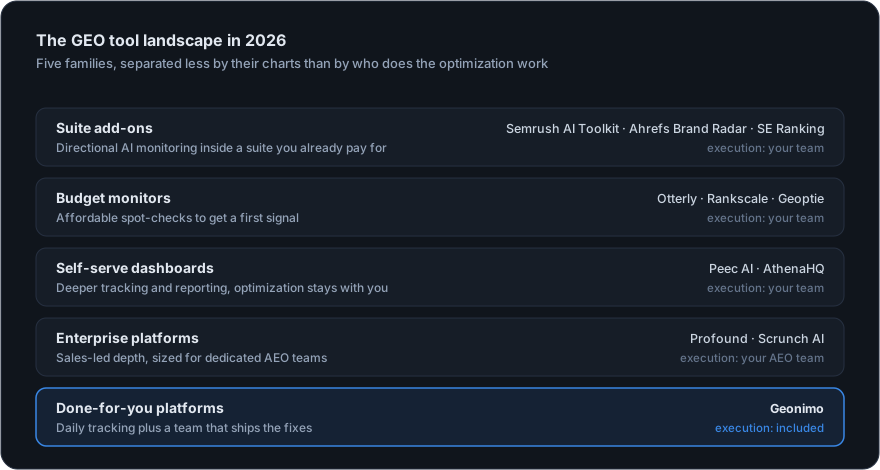
The category has exploded, and the tools in it are genuinely different from each other: enterprise platforms, self-serve dashboards, suite add-ons, and done-for-you services all call themselves generative engine optimization tools. This guide compares nine of them honestly, including our own.
Full transparency: Geonimo is our product. We have kept the assessments straight, including what we do not do yet and where a competitor is the better fit.
What Are GEO Tools?
GEO optimization tools do two jobs. First, measurement: they run your buyers' questions against AI engines on a schedule, detect brand mentions for you and your competitors, and capture the sources those engines cite. Second, optimization: they turn that data into actions, from content recommendations to full done-for-you execution. Some tools only do the first job. The pricing usually tells you which.
The market sorts into five families, and knowing which family you are shopping in saves most of the evaluation time:
The 9 Best GEO Tools in 2026
1. Geonimo
Best for: SMBs and agencies that want serious measurement plus a team that does the work.
Geonimo tracks your prompts daily across three engines: ChatGPT, Google AI Mode and Perplexity. Two things distinguish the measurement layer. Every answer comes with verified citations: the actual sources each engine cited or silently read before answering, not a guess at what might have influenced it. And because AI answers vary between runs, share of voice is reported with confidence intervals from repeated daily sampling, so you can tell real movement from noise.
The bigger difference is the service model. Geonimo is done-for-you: a team analyzes your data, builds the strategy, and executes the content and citation work, with the dashboard as the shared source of truth.
Honest limits: Geonimo does not track Gemini or Google AI Overviews answers today. Both are on the roadmap. If per-answer Gemini tracking is a hard requirement right now, another tool fits better.
Pricing: Growth at $199/month ($159/month billed yearly), Expansion at $399/month ($319 yearly). No free trial, but the free AI visibility audit shows you real data on your brand before you pay anything. Head-to-head comparisons live on our compare page.
2. Profound
Best for: Enterprises with dedicated AI search teams.
Profound is the best-known enterprise platform in the space, with deep answer-engine analytics and the integrations and governance features large organizations expect. Pricing is custom and sales-led, which is normal at that tier but puts it out of reach for most SMBs. If you have an in-house team ready to act on the data and an enterprise budget, it belongs on your shortlist. See Geonimo vs Profound for the full head-to-head.
3. Peec AI
Best for: Marketing teams that want self-serve dashboards.
Peec AI starts at 89 euros per month with unlimited seats, which is generous for teams that want everyone looking at the same data. Note the engine model: additional engines beyond your base plan carry add-on fees, so price the configuration you actually need rather than the entry price. It is a measurement tool; the analysis and execution stay with your team. Full breakdown: Geonimo vs Peec.
4. Otterly
Best for: Solo marketers and small teams starting out.
Otterly starts at $29 per month, one of the lowest entry points for real prompt monitoring. You get brand mention tracking across major AI surfaces without much setup. The trade-off is depth: lighter competitive analysis and no execution layer. As a first paid step out of manual spreadsheet tracking, it is a reasonable one.
5. Rankscale
Best for: Testing the category cheaply.
Rankscale offers self-serve plans from around $20 per month as of mid-2026, with familiar rank-tracker ergonomics applied to AI engines. That makes it cheap to trial, but costs rise as your tracked prompt set grows, so model what daily tracking of a full prompt portfolio would cost before committing to it as your long-term system.
6. AthenaHQ
Best for: Teams wanting a dedicated GEO platform above entry-level pricing.
AthenaHQ starts around $245 per month, positioning it above the self-serve entry tools and below enterprise custom pricing. It is a dedicated answer-engine visibility platform rather than a suite add-on. At that price it competes directly with done-for-you options, so weigh whether you want more software or more service for the same budget.
7. Semrush AI Toolkit
Best for: Teams already paying for Semrush.
Semrush's AI Toolkit adds AI visibility tracking as a paid add-on to the suite you may already use for SEO. The upside is consolidation: one vendor, one login, familiar reporting. The trade-off is that suite add-ons rarely match the depth of dedicated platforms on citation analysis and prompt-level detail. If you live in Semrush daily, start there and see if it answers your questions.
8. Ahrefs Brand Radar
Best for: Ahrefs customers wanting a broad market view.
Brand Radar takes a different approach: instead of running your custom prompts, it works from Ahrefs' pre-collected index of AI answers. That gives you breadth across huge numbers of queries you would never think to track, inside a tool you may already pay for. The flip side of index-based data is that it is not your prompt set sampled daily, so it complements custom tracking more than it replaces it.
9. Geoptie
Best for: Tight budgets and free first steps.
Geoptie offers a set of free mini-tools for quick GEO checks (a GEO rank checker, a free GEO audit, a keyword finder), with low-cost paid plans behind them. The free utilities are a genuinely low-friction way to poke at the space before spending anything. The paid tier is budget monitoring rather than a full analysis platform, and that is fine for what it costs.
GEO Tools Comparison Table
| Tool | Starting price | Model | Best for |
|---|---|---|---|
| Geonimo | $199/mo ($159/mo yearly) | Daily tracking on ChatGPT, Google AI Mode, Perplexity + done-for-you team | SMBs and agencies wanting execution included |
| Profound | Custom (enterprise) | Enterprise answer-engine analytics | Enterprises with in-house teams |
| Peec AI | 89 euros/mo + engine add-ons | Self-serve dashboards, unlimited seats | DIY marketing teams |
| Otterly | $29/mo | Lightweight monitoring | Solo marketers |
| Rankscale | From ~$20/mo | Self-serve AI rank tracking | Trying the category |
| AthenaHQ | ~$245-295/mo | Dedicated GEO platform | Mid-market software buyers |
| Semrush AI Toolkit | Add-on to Semrush plans | Suite add-on | Existing Semrush customers |
| Ahrefs Brand Radar | Inside Ahrefs plans | Pre-collected index of AI answers | Existing Ahrefs customers |
| Geoptie | Free mini-tools, low-cost paid plans | Budget monitoring | Free-first exploration |
Pricing reflects public vendor pages and reported figures as of mid-2026; this category reprices fast, so verify on the vendor's site. For a wider look at the measurement-only landscape, see our 10 best AI visibility tools comparison.
GEO Tools vs SEO Tools: What's Actually Different
It is tempting to treat GEO tools as rank trackers with a new coat of paint. The measurement problem is genuinely different, in three ways.
Answers vs rankings. SEO tools measure your position in a ranked list that is roughly the same for everyone who searches. GEO tools measure your presence inside a generated answer that changes between runs of the identical prompt. That is why serious GEO tools sample repeatedly and report rates and trends, while a rank tracker can check once and be done. A single AI answer check is an anecdote; a mention rate over thirty days is a measurement.
Citations vs backlinks. In SEO, backlinks are the currency of authority, and tools count them. In GEO, the currency is which sources an engine actually reads and cites when it composes an answer about your category. Those citation sets overlap only partially with who links to whom, which is why GEO tools capture the cited sources per answer. The citation list is also your action list: it tells you exactly which pages to improve or get mentioned on.
Prompts vs keywords. Keywords come with search volume data, so SEO tools can rank opportunities by traffic. Prompts have no public volume data. GEO tools instead work from a portfolio of buyer questions you define: recommendation prompts, comparison prompts, problem prompts. You choose them by revenue relevance, not volume, and the tool's job is to sample that portfolio consistently.
Is Generative Engine Optimization a Thing?
Yes. The term comes from a 2023 academic paper that studied how content changes affect visibility in generative engine answers, and the practice has since grown into a real discipline with its own metrics, tools and budgets. The skepticism is understandable, because some of what gets sold as GEO is ordinary SEO relabeled. But the genuinely new parts are real: buyers ask AI assistants questions and act on the answers, engines choose which brands to name and which sources to cite, and both are measurable and influenceable. That measurable, influenceable layer is what GEO tools exist for. Our what is GEO guide covers the discipline in depth.
How to Choose
- Under $100/month: Otterly, Rankscale or Geoptie get you consistent monitoring, and you do all the analysis and execution.
- Self-serve team dashboards: Peec AI, or Semrush and Ahrefs if you already pay for their suites.
- Measurement plus execution: Geonimo, where the $199/month includes the team doing the work, not just software showing you what is wrong.
- Enterprise: Profound, with AthenaHQ as a mid-market alternative.
Whatever direction you lean, start with data instead of a demo. Our free AI visibility audit shows how ChatGPT, Google AI Mode and Perplexity treat your brand today, with first insights within 24 hours. If the audit shows you are already everywhere, you need less tooling than you thought. Most brands find the opposite.
Related Articles