ChatGPT citations drop after major model updates because each release changes when and how the model decides to search the web. When a new model is more selective about retrieval, it fetches fewer pages and hands out fewer citations, and the churn lasts days to weeks before a new equilibrium forms. The March 2026 GPT-5.3/5.4 episode is the clearest case study of this pattern so far. This post walks through what we observed, why it keeps happening, and what to do before the next release lands.
The Pattern: Every Major Update Churns Citations
Updated July 2026. With a few months of hindsight, the March episode played out the way these episodes tend to. The post-update citation churn stabilized over the subsequent weeks: retrieval volume settled at a new baseline, some sites recovered their citation share, and others found that the more selective models simply stopped citing them.
The useful lesson is that the pattern is not specific to GPT-5.3 and 5.4. Every major model update changes when and how the model decides to search the web, and citation churn follows for days to weeks before a new equilibrium forms. We saw versions of this around earlier GPT-5 releases, and we expect it again with the next ones.
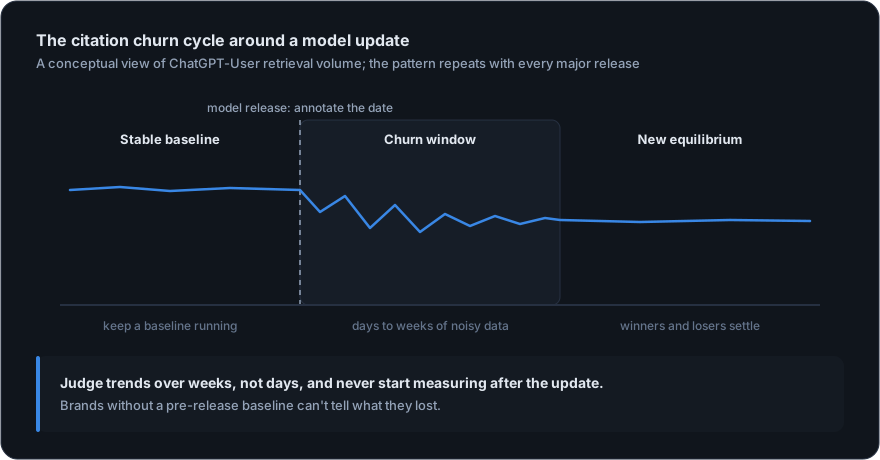
Practically, that means three things. Treat model release dates as annotation events in your tracking, so you can separate "the model changed" from "our content changed". Judge trends over weeks, not days, because the churn window right after a release is the noisiest data you'll collect all year. And keep a baseline running continuously: brands that only start measuring after an update can't tell what they lost.
Case Study: The March 2026 Citation Drop
Something shifted in early March 2026. Across multiple data sources, ChatGPT-User bot activity (the crawler that visits websites to build citations) declined. Not a crash, but a clear downward trend after a plateau that started around March 3.
The data comes from server logs, not prompt tracking. This is an important distinction. When ChatGPT cites your website, it first sends its ChatGPT-User crawler to fetch the page. That visit shows up in your server logs with a 200 or 304 status code. By tracking these visits across many websites, you can see macro trends in how often ChatGPT is retrieving external content.
The trend was clear: fewer retrieval visits, which means fewer citations being generated.
Meanwhile, click volume (actual users clicking through from ChatGPT to websites) remained stable. People kept acting on AI recommendations. AI was just being pickier about which recommendations to make.
Key dates we observed:
- Mar 3. ChatGPT 5.3 release: first noticeable plateau in citation volume
- Mar 5. ChatGPT 5.4 release: significant drop begins
- Mar 11. GPT-5.1 retired: massive OAI-SearchBot activity spike
- Mar 16. ChatGPT 5.3 update: another dip follows
What Changed: The GPT-5.3 / 5.4 Split
To understand the drop, you need to understand what OpenAI did with these releases. GPT-5 was previously the single default experience. With 5.3 and 5.4, OpenAI introduced a meaningful split:
- GPT-5.3 became the default model for all users, including Free tier. This is the model most people interact with daily.
- GPT-5.4 is positioned for deeper reasoning and complex tasks. Think of it as the "premium" thinking model.
Based on the retrieval patterns we observed, both releases appear to have changed how ChatGPT decides when to search the web: the models seem to make more selective decisions about when to retrieve external content. More selective retrieval means less unnecessary fetching, which means fewer citations overall.
GPT-5.3 is likely driving the majority of the decline simply because Free users represent the largest share of ChatGPT usage. When the model that most people use gets more selective about searching, the aggregate effect on citation volume is large.
The OAI-SearchBot Mystery
There's a second signal worth paying attention to. On March 11, when OpenAI retired GPT-5.1 models, there was a huge spike in OAI-SearchBot activity. This isn't the ChatGPT-User bot that fetches pages for citations: it's a separate crawler.
The last time this kind of spike happened was February 9, when OpenAI started testing ads in the Free tier. The pattern suggests OAI-SearchBot is involved in building or updating some kind of index or cache.
This is speculative, but it's worth watching. If OpenAI is building a persistent index of web content (rather than fetching pages live for every conversation), it would fundamentally change how citations work:
- Being indexed becomes as important as being fetchable. If ChatGPT pulls from a cache instead of live-crawling, your content needs to be in that cache first.
- Freshness might matter more. If the index updates periodically, recently published or updated content could get priority.
- The bot crawl pattern becomes a leading indicator. More OAI-SearchBot visits to your site could mean you're being indexed more thoroughly.
What This Means for Your Brand
Let's be direct. Here's what this shift means in practical terms:
1. Fewer Citations = Higher Stakes Per Citation
When ChatGPT cites fewer sources per response, the sources it does cite carry more weight. Being one of three cited sources is more valuable than being one of eight. But the bar to get cited is higher.
Action: Focus on making your most important pages undeniably authoritative. Schema markup, comprehensive content, clear structure, expert attribution. The marginal pages that "might" get cited won't anymore. Only the best will. The playbook is in our ChatGPT SEO guide.
2. AI Visibility Will Become More Concentrated
With more selective models, we'll likely see a "winner takes more" effect. The brands that are already well-cited will maintain or grow their share. The brands on the margins will lose citations disproportionately.
Action: If you're not already tracking your AI visibility, start now. You need a baseline before you can tell if you're gaining or losing share as the citation pool shrinks. How to track brand mentions in ChatGPT covers the free and automated ways to build one.
3. Content Quality Beats Content Volume
The old SEO playbook of "publish more, rank more" doesn't apply here. More selective models are better at weighing quality, authority, and relevance. Publishing 50 thin articles won't help if none of them meet the new citation threshold.
Action: Audit your existing content for AI citability. Does it have FAQ schema? HowTo markup? Clear, factual claims? Expert attribution? These signals help AI models decide your content is worth citing.
4. Multi-Engine Monitoring Is Now Essential
ChatGPT's behavior changes on OpenAI's schedule, but Perplexity and Google's AI surfaces follow their own retrieval logic and their own release calendars. A citation drop on ChatGPT doesn't necessarily mean a drop everywhere. You might be losing ChatGPT citations while gaining on Perplexity.
Action: Don't rely on a single engine's data. Track the same prompts across ChatGPT, Google AI Mode and Perplexity so an engine-specific drop is visible against a cross-engine baseline.
5. Server Logs + Prompt Tracking = Complete Picture
This entire analysis was only possible because someone was monitoring server logs. Prompt tracking (querying AI platforms and checking if your brand is mentioned) shows you the output: are you being recommended? Server logs show you the mechanism: is AI actually crawling your site?
You need both. Together, they give you the complete picture:
- Prompt Tracking. Answers the question: "Is AI recommending my brand?" Tracks visibility score, share of voice and mention position across ChatGPT, Google AI Mode and Perplexity. Geonimo's ChatGPT Visibility Tracker covers this side, with verified citations for every tracked answer.
- AI Traffic / Log Monitoring. Answers the question: "Is AI crawling my site?" Tracks bot visits, referral traffic, crawl frequency by platform. Reveals infrastructure-level shifts like this citation drop. That's the job of the AI Tracker, which detects crawlers like ChatGPT-User, OAI-SearchBot, GPTBot, PerplexityBot, ClaudeBot and Google-Extended, plus referral visits from AI platforms.
Two Shifts to Watch
To zoom out: we're seeing two overlapping changes that will keep reshaping AI visibility:
- Models that search more selectively. The GPT-5.3/5.4 generation retrieves external content less often but, plausibly, more relevantly. The "spray and pray" era of AI citations is ending, and each future release will move this line again.
- A system that's rebuilding how it indexes the web. The OAI-SearchBot activity spikes suggest OpenAI is investing in persistent indexing infrastructure. This could mean a shift from real-time retrieval to cached/indexed retrieval: a fundamentally different architecture. It's too early to be definitive about this one, but the crawl patterns are the place it will show up first.
What to Do Before the Next Release
If you're a brand or marketing team that cares about AI search visibility, here's the action plan:
- Audit your top pages for AI citability. Check for schema markup, structured data, authority signals, and readability. Fix the gaps, starting with the pages already earning citations.
- Verify crawler access. Run your site through the free AI crawlability checker: if ChatGPT-User or OAI-SearchBot can't reach your pages, no model update matters.
- Set up AI traffic monitoring. Whether through server logs, a Cloudflare Worker, or a JS tracker: start tracking ChatGPT-User, OAI-SearchBot, PerplexityBot, and other AI crawlers hitting your site.
- Track your visibility across engines. Don't assume ChatGPT trends apply everywhere. Monitor your brand mentions across ChatGPT, Google AI Mode and Perplexity separately, and annotate model release dates in the data.
- Double down on your best content. The pages that are already getting cited? Make them better. Add schema, update facts, strengthen authority signals. In a shrinking citation pool, the rich get richer.
- Watch the OAI-SearchBot. If it's crawling your site more frequently, that's a good sign. If it's not crawling you at all, you may be falling out of whatever index OpenAI is building.
AI is getting smarter about who it cites. The question is whether you'll be in the smaller, more selective pool, or left out entirely.
The brands that treat each model update as an annotated, measurable event will be fine. The ones that don't notice until their visibility score drops to zero? They'll have a much harder time climbing back. If you want a baseline before the next release, get a free audit: first insights on your brand within 24 hours.
Related Articles